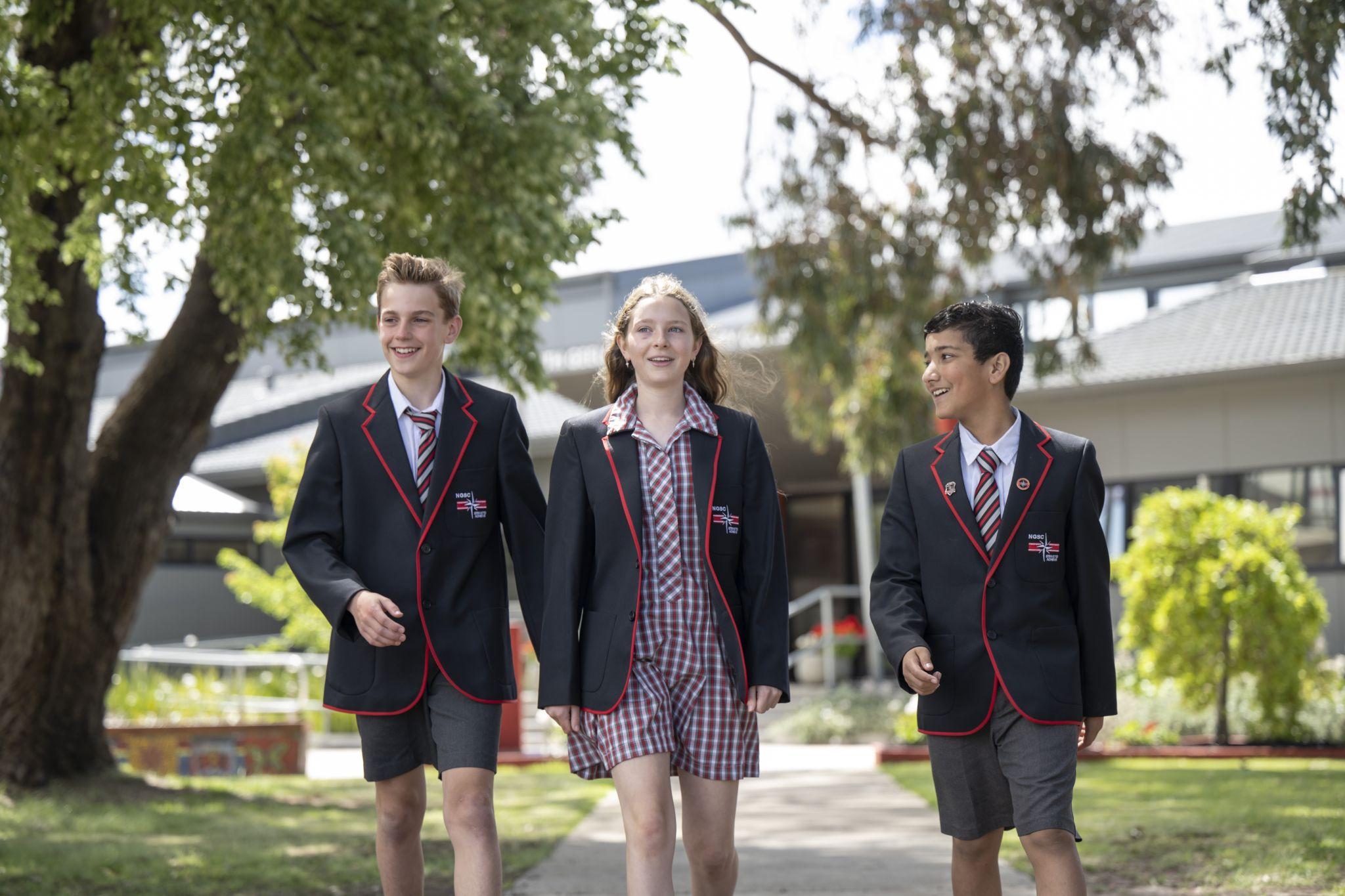
Starting Secondary School
2026 Term 1 Regional Parenting Calendar
Chess Club Term 1
Pick Mix Lunchbox
Rod Stoper Forum
In Our Words
Show my Pride

Krizza Kotkar
Student Wellbeing Coordinator

Christina Doyle
Student Wellbeing

Georgie McIlvenny
Student Wellbeing

Faith Field
Secondary School Nurse
Starting Secondary School
Going to secondary school: what to expect
The transition to secondary school means big changes for your child. For example, your child’s friendships and peer group, schoolwork, uniform, and school environment and routines are all likely to change. Your child will adjust to these changes, but it might take time.
Friends and peers
When your child goes to secondary school, they’ll meet new peers and make new friends. They’ll also need to work out where they fit in a new peer group.
Schoolwork
At secondary school, your child will:
- learn across a wide range of subjects
- work with different teachers in different classrooms with different teaching and assessment styles
- become more responsible for their own learning
- have a heavier and more complicated study and homework load
- learn a new and more complex timetable.
School environment
Your child will have to adjust to a new school campus, probably with more students, classrooms and facilities than their primary school. They’ll also have to learn to find their way around the campus and get to class on time with the right books and materials. They might also have to remember how to get to and from school on public transport.
These changes can be particularly challenging for children with disability or other additional needs, and children living in rural or remote communities.
Feelings
It’s natural for children to have mixed feelings about moving from the familiar to the unknown and learning new ways of doing things. For example, children might be:
- excited about new friends, subjects and teachers
- nervous about learning new routines, making new friends or wearing a new uniform
- worried about handling the workload or not fitting in.
Preparing to start secondary school
You can help to ease any worries your child has about starting secondary school by preparing your child.
Feelings
Here are ideas for working through mixed feelings and worries:
- Talk with your child about what they’re most looking forward to and what they’re worried about. Actively listen when your child shares their feelings and worries about secondary school.
- Reassure your child that it’s natural to worry about going to secondary school. Let your child know you’re confident they’ll settle in eventually.
- Encourage your child to look at the positive side of the move to secondary school. For example, you could highlight the new extracurricular activities your child could try.
- Talk with your child about keeping in touch with old friends and making new friends.
- Share your own positive high school experiences or the experiences of friends and family.
During the transition to secondary school
Practical issues
Here are ideas to help with the practical side of the transition to high school:
- Try to arrange for a parent, grandparent or other close adult to be home before and after school for the first few weeks after your child starts secondary school.
- Work on routines for before and after school. This could include making time for homework, hobbies and sport, and relaxation before bed.
- Use a weekly planner to help your child learn the school routine. Put the planner where you and your child can see it easily, like on the fridge. List daily school and extracurricular activities, plus the equipment that your child needs for each activity.
- Try to make sure your child eats healthy food and gets plenty of physical activity and sleep. This will help if your child is feeling tired.
- Try to make your home as comfortable for study time as possible. For example, make sure your child has a quiet place to study, away from distractions like the TV or a mobile phone.
- Let your child know which school staff to talk to for help if they need it – for example, teachers, the sub school team and/or the wellbeing team.
Friends
These ideas might help with worries about getting to know people and making new friends at high school:
- Reassure your child that it’s common to worry about making new friends. Let your child know you’re confident they’ll make friends eventually.
- Let your child know that new friends are welcome in your home. Encourage your child to invite new friends over, or be ready to transport your child to their houses.
- Help your child explore new opportunities. Learning a musical instrument, trying a new sport or joining a drama class are great ways for your child to meet new people and get involved in school activities.
- Encourage your child to keep in touch with their old friends so they still feel socially connected.
Teachers
Good relationships between your child and their teachers will help your child have a positive transition to secondary school. One of the best ways for your child to build these relationships is by asking their teachers questions when they’re unsure about tasks or expectations or when they need help.
Feelings
You could try these suggestions for handling emotional ups and downs:
- Be prepared for ups and downs. Adjusting to change takes time, but if things don’t settle down after the first term, talk to your child’s teacher or year level coordinator.
- Remind your child that it’s natural to feel nervous about starting something new. For example, you could share how nervous and excited you feel when starting a new job.
- Talk to other parents to check whether your child’s experiences and feelings are similar to those of others. Sporting and school events are good opportunities to meet other parents.
- Stay calm. If you’re calm and reassuring, you’ll help your child feel confident about getting through the start of secondary school.
Signs your child might be having difficulty at secondary school
If your child is struggling with the transition to secondary school, they might:
- not want to go to school or refuse to go to school
- say they feel sick on Sunday nights
- seem uninterested in schoolwork or school activities
- avoid talking with you about school or friends
- seem low on confidence – your child might say they’re dumb or nobody likes them
- get lower marks than they used to.
If your child is having trouble, don’t wait for things to improve on their own. Try to get your child talking about how they’re feeling, let them know that it’s OK to feel worried, and see whether you can work out some strategies together.
If things don’t improve within 2-3 weeks, consider speaking with your child’s teacher, year level coordinator, wellbeing coordinator or GP.
Your feelings about your child starting secondary school
Your child’s transition to secondary school is a big change for you too. Your relationship with your child’s primary school might be ending, and you’re likely to have a different sort of relationship with your child’s secondary school.
It’s natural to have mixed feelings about these changes.
It often helps to talk to other parents, particularly those who have gone through high school transition before. It might ease your mind to know that most children find things a little hard at first but settle in during the year.
Also, other parents who are experienced at your child’s new school can often answer small questions and give you helpful tips about how things work at the school.
And don’t be surprised to find that your child doesn’t want you to be around at their secondary school. But although your child is developing more independence, they’ll still need your support outside of school.
Year 12 Camp
In week 1, we delivered a health education session at Year 12 camp focusing on the importance of staying healthy through Year 12. The session covered:
- Healthy Eating
- Physical Activity
- Sleep
- Mental Health
- Social Health
Art Therapy
Tina will be commencing the NGSC Art Therapy Program in Week 4. Tina will be providing group Art Therapy one period per week. Parent consent is required for this program. Art Therapy aims to reduce distress and improve social, emotional and mental health by promoting insight, self-compassion and a sense of agency and self-worth.
Join a headspace Geelong group program
headspace Geelong invites you to join their group programs in 2026. A great opportunity to meet like minded young people in the region.
Brainspace - A chill, low-sensory group space for neurodiverse young people - and you don’t need a diagnosis to join in. The program explores relationships, life skills, and managing emotions, all from a neurodiverse perspective.
Peerspace - Combines discussions of lived mental health experience with psychoeducation around a wide range of topics, customised for what each young person is interested in exploring.
For more information 2026 group programs
Under 18s travel free with a Youth myki
Public transport is free for children under 18, making it easier for young people to stay connected, whether travelling to school, sport, work or social activities, while helping families save on everyday costs.
The Youth myki is available for purchase for $5 – this is for the cost of the card, you won’t need to pay for anything after this.
For more information Youth myki | Free travel for children under 18 - Transport Victoria
Did you know that vapes can’t be thrown out into any of your kerbside bins?
Classified as e-waste, vapes contain batteries, plastic and harmful chemicals that pollute the environment and cause fires in rubbish trucks and landfills. To support the community to dispose of these devices safely, dedicated vape recycling bins are now available at the following locations:
- The Nest Youth Hub - 17 Gheringhap Street, Geelong
- The fOrT Youth Centre - Cnr Melbourne and St Georges Rd, Norlane
- Geelong Resource Recovery Centre - 21 Slevin Street, North Geelong
- Drysdale Resource Recovery Centre - Becks Rd (off Murradoc Rd), Drysdale
2026 Term 1 Regional Parenting Calendar
Chess Club T1 2026
Rod Stoper Forum
In Our Words
For more than 20 years, the In Our Words survey has shed light on LGBTIQA+ young people’s health and wellbeing in Australia. Last time in 2021, over 6000 LGBTIQA+ young people shared their stories, leading to real service and policy changes for the community. It guides programming and funding decisions, so it’s important to hear from regional voices.
In Our Words is now open and they want to hear from you!
If you’re:
- 14-21 years old
- Lesbian, gay, bi+, trans, intersex, queer, ace/aro, or anywhere on the rainbow
Take part in this anonymous survey to help shape the future of LGBTIQA+ young people’s health and wellbeing in Australia.
Your voice, real change.
Survey link:
https://latrobearcshs.qualtrics.com/jfe/form/SV_8kN2NovmmlzaHhc
Pick mix lunchbox
Show My Pride