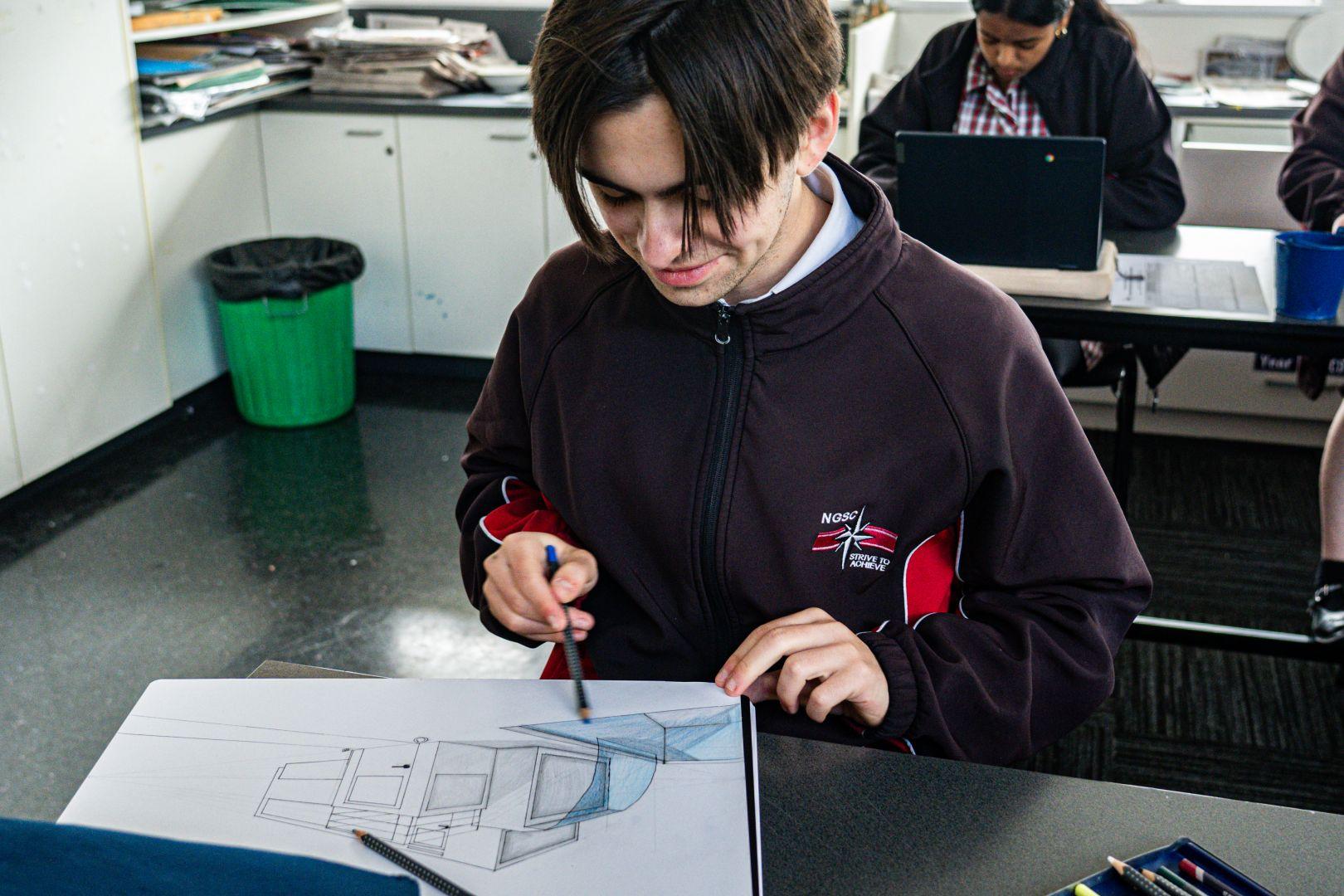
At North Geelong Secondary, we are proud of our senior students’ excellent academic results and high completion rates in all pathways. Consistently, we see our senior students achieve high levels of success in all their chosen programs.. All students are supported to find their next destinations post-secondary education, whether it is tertiary study at university or TAFE, or sustainable employment such as in apprenticeships and traineeships.
With its broad range of choices, including both academic VCE and VCE Vocational Major studies, as well as VET studies, the senior school curriculum at North Geelong Secondary College prepares students to develop the skills that will allow them to transition from the school setting into universities, training and further education, apprenticeships or employment.
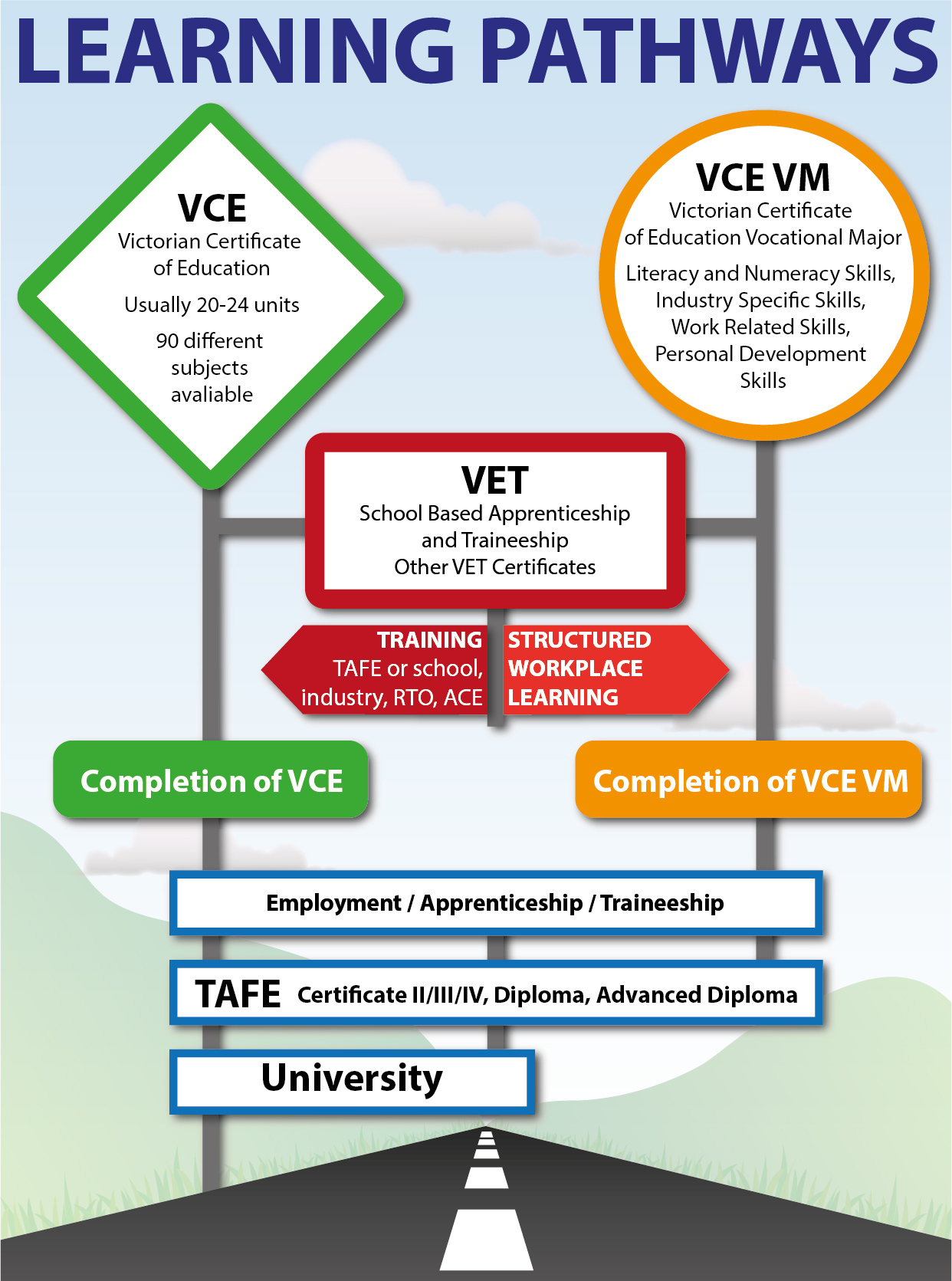
Victorian Certificate of Education - VCE
VCE students will be generally be required to study 22 units taken over two years. 12 Units in Year 11 and 10 Units in Year 12. These subjects may include approved VET units. The 22 units must include the following:
Year 11
Units 1-2 of English, EAL or Literature
Units 1-2 of four more subjects (other than the English group above)
Total: 12 units
Year 12
Units 3-4 of English, EAL or Literature
Units 3-4 of four more subjects (other than the English group above)
Total: 10 units
Satisfactory Completion
The minimum requirement for a student to be awarded a VCE at the end of Year 12 is that a student must have completed 16 units. This must include the satisfactory completion of:
At least three units of English or Literature or EAL (including units 3 and 4).
Units 3 and 4 of at least three more subjects (other than the English group above).
Satisfactory completion of each VCE unit is based on demonstration of the key knowledge and key skills specified in that unit of the relevant VCE subject. Satisfactory completion of each unit is determined by the subject teacher in accordance with the VCAA requirements and outcomes documented in the study designs.
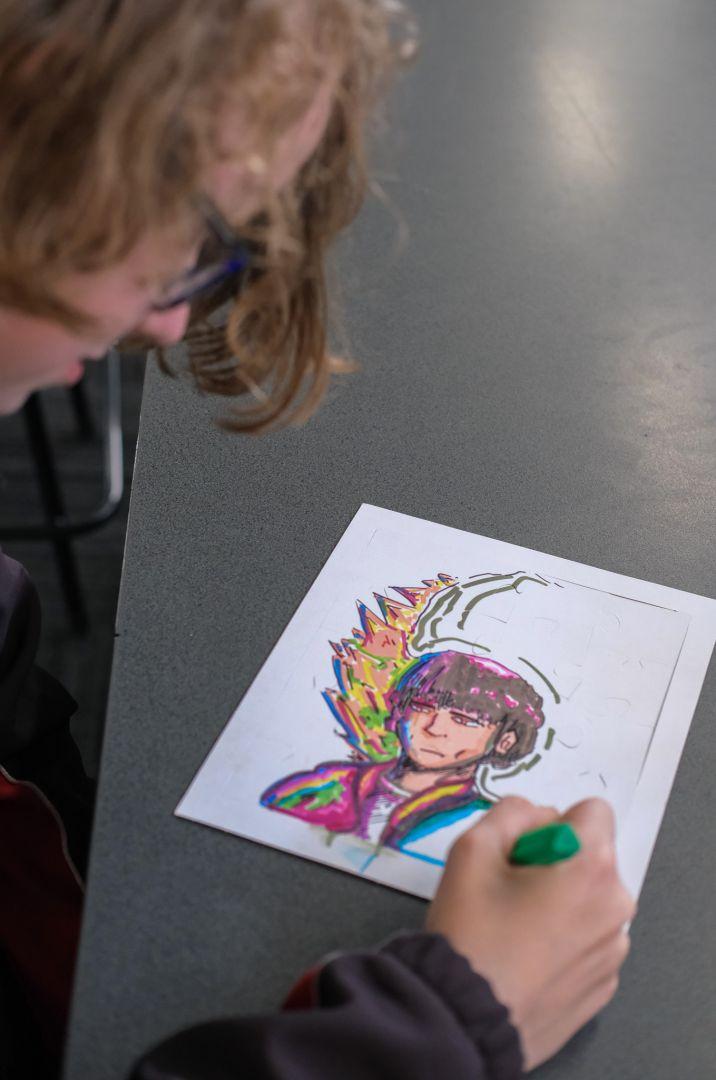
Turn ideas into powerful artworks and showcase your creativity to others. Experiment with different materials, techniques and styles while learning how artists communicate meaning through visual language. You’ll create your own original artworks, develop exhibition pieces, and explore how galleries and exhibitions bring art to life. Perfect for students who enjoy painting, drawing, mixed media or creative experimentation.
Move, perform and express yourself through choreography and performance. Dance gives students the chance to build confidence, creativity and physical skills while exploring how movement tells stories and connects with audiences. You’ll learn professional dance techniques, create your own choreography, perform in solo and group pieces, and analyse the work of choreographers from different styles and cultures.
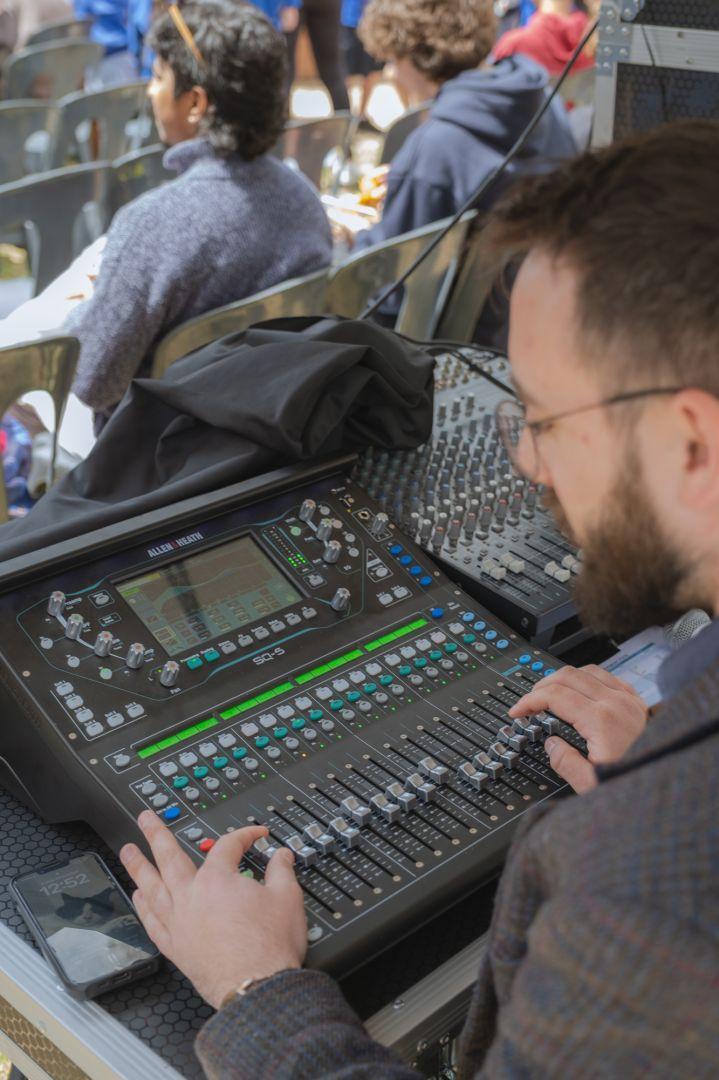
Step into new worlds, create unforgettable characters and bring stories to life on stage and off. Theatre Studies allows students to act, direct, design and analyse how performances are brought to life on stage. You’ll develop performance skills, create and perform characters, and explore stagecraft elements such as lighting, costume, sound, makeup and set design. Students also experience professional theatre productions and learn how theatre entertains, challenges and connects with audiences. Perfect for students interested in acting, storytelling, performance, production or the creative world of theatre.
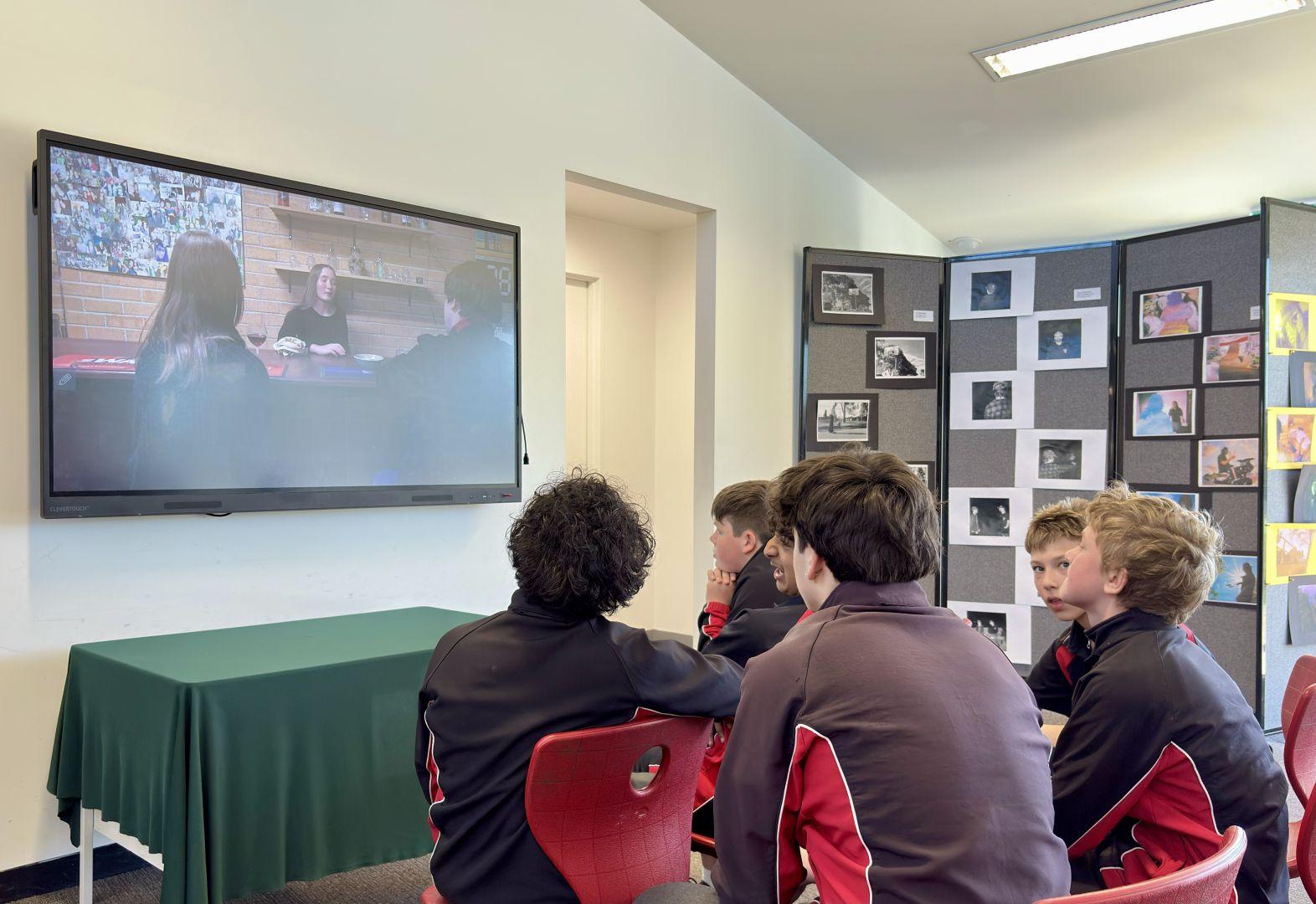
Create films, produce content and explore the world of modern media. Media is ideal for students interested in filmmaking, photography, journalism, television, social media, podcasts or digital storytelling. You’ll learn how media shapes the world around us while gaining hands-on experience in filming, editing, directing and content creation using industry-style technology and creative production techniques. Students develop their own media productions, experimenting with camera work, sound, lighting, editing and storytelling techniques to engage audiences. You’ll also analyse how media influences culture, by viewing trends and public opinion across platforms such as film, television, and much more.
Visual Communication Design is distinct in its study of visual language and Design the future through creativity, innovation and visual problem-solving. Visual Communication and Design is perfect for students interested in graphic design, architecture, branding, illustration, digital design or advertising. You’ll learn how designers use typography, imagery and layout to communicate ideas, influence audiences and solve real-world design challenges using both digital and manual techniques. You’ll create professional-style design work including logos, posters, packaging, architectural drawings and promotional material while learning how design impacts everyday life.
Extended Investigation students undertake a self-directed investigation into an area of personal interest over the course of one school year. There is no subject-specific prescribed content; instead, the learning is focused on the skills of inquiry, research, analysis and critical thinking.
English and English as an Additional Language (EAL) focuses on the ‘how’ English language is used to create meaning in print and digital texts of varying complexity. Texts selected for study are drawn from the past and present, from Australia and from other cultures, and comprise many text types, including media texts, for analysis of argument. The study is intended to meet the needs of students with a wide range of expectations and aspirations, including those for whom English is an additional language.
Can only be studied in conjunction with English Units 1&2. Must be averaging 70% across assessment tasks at Year 10.
Literature focuses on the meanings derived from texts, the relationships between texts, the contexts in which texts are produced, and how readers’ experiences shape their responses to texts. VCE Literature enables students to examine the historical, social and cultural contexts within which both readers and texts are situated.
Can only be studied by students going unscored in Year 12.
VCE Foundation English Units 1 and 2 are designed for students who wish to strengthen their literacy, communication, and practical English skills in preparation for further study, training, employment, and everyday life. The subject focuses on developing confidence in reading, writing, speaking, listening, and viewing across a range of real-world, workplace, academic and personal contexts.
Health and Human Development takes a broad and multidimensional approach to defining and understanding health and wellbeing. Students investigate the World Health Organization’s definition and other interpretations of health and wellbeing. For the purposes of this study, students consider wellbeing to be an implicit element of health. Wellbeing is a complex combination of all dimensions of health, characterised by an equilibrium in which the individual feels happy, healthy, capable and engaged.
Outdoor and Environmental Studies develops students’ understandings of outdoor environments, and the ways in which humans interact with, relate to and have impacted outdoor environments over time. The area of study outdoor environments encompasses landscapes, both local and further afield, that range in health from protected wilderness to those heavily impacted by human practices.
Physical Education explores the complex interrelationships between anatomical, biomechanical, physiological and skill acquisition principles to understand their role in producing and refining movement, and examines behavioural, psychological, environmental and sociocultural influences on performance and participation in physical activity. The assimilation of theoretical understanding and practice is central to the study of VCE Physical Education. Students participate in practical activities to examine the core concepts that underpin movement and that influence performance and participation in physical activity, sport and exercise.
Accounting explores the financial recording, reporting, analysis and decision-making processes of a sole proprietor small business. Students study both theoretical and practical aspects of accounting. They collect, record, report and analyse financial data, and report, classify, verify and interpret accounting information, using both manual methods and information and communications technology (ICT).
Business Management examines the ways businesses manage resources to achieve objectives, while following the process from the initial idea for a business concept, to planning and establishing a business, through to the day-to-day management of a business. It also considers changes that need to be made to ensure the continued success of a business. Students develop an understanding of the complexity of the challenges facing decision-makers in managing businesses and their resources.
The study of Geography allows students to explore, analyse and come to understand the characteristics of places that make up our world. Geographers are interested in key questions concerning places and geographic phenomena: What is there? Where is it? Why is it there? What are the effects of it being there? How is it changing over time? How could, and should, it change in the future? How is it different from other places and phenomena? How are places and phenomena connected?
Global Politics is the study of the political, social, cultural and economic forces that shape interactions between states and other global actors in the contemporary world. It examines the interconnectedness of the contemporary global political arena and the impact of globalisation on culture, sovereignty, human rights and the environment. It examines the nature and power of key global actors and the types of power used by an Asia-Pacific state to achieve its national interests. It considers global ethical issues including human rights, people movement, development and arms control and explores the nature and effectiveness of global responses to crises such as climate change, armed conflict, terrorism and economic instability.
Ancient History investigates individuals and societies (Mesopotamia, Egypt, Greece, Rome and China) across three millennia. Empires explores the ideas and power relations accompanying the growth of empires in the early modern period.
Modern History examines the causes and consequences of conflict and change in the modern era. Australian History investigates continuity and change from pre-colonial times to the modern day. Revolutions explores the causes and consequences of significant social upheaval (America, France, Russia and China) in the modern period.
Legal Studies examines the institutions and principles that are essential to the Australian legal system. Students develop an understanding of the rule of law, law-makers, legal institutions, the relationship between the people and the Australian Constitution, the protection of rights in Australia, and the Victorian justice system.
Sociology focuses on the study of human behaviour and social interaction to understand how societies are organised, develop and change. There is no single sociological perspective, rather, there are several theories that offer different ways of understanding human society. Sociologists use these theories and frameworks in a complementary way to attempt to objectively examine social issues and explain concepts. In VCE Sociology students examine key theories regarding family, deviance, ethnicity, community and social movements.
Foundation Mathematics focuses on providing students with the mathematical knowledge, skills, understanding and dispositions to solve problems in real contexts for a range of workplace, personal, further learning, and community settings relevant to contemporary society.
In General Mathematics, students will apply mathematical concepts and acquire and develop skills in carrying out mathematical rules and techniques. These skills will then be employed in solving a range of real life applications including the use of technology to help solve problems. The topics covered include univariate and bivariate data; linear equations and graphs; shape and measurement; trigonometry; financial arithmetic; sequences and series and networks.
Mathematical methods has students explore the topics of graphs and relations, probability and calculus. Graphs and relations explores how to solve and graph polynomial functions, trigonometric functions, exponentials and logarithms. Probability delves into counting methods, conditional probability and probability distributions. Calculus explores how to calculate and the various uses of derivatives, double derivatives, antidifferentiation and integration. Throughout all these topics students learn how to solve by hand and through the CASIO Classpad. In Year 12 each topic requires students to work through an application style task as part of their School Assessed Classwork before they have a tech-free and tech allowed Examination at the culmination of the year.
Specialist Mathematics extends Mathematical Methods by exploring advanced topics including complex numbers, vectors, mathematical proof, advanced calculus, mechanics, and statistical inference.
Students develop skills in proof techniques, polar form and De Moivre’s theorem, advanced functions and graphs, integration techniques, differential equations, vector operations in two and three dimensions, and the application of calculus to mechanics and kinematics.
Strong emphasis is placed on rigorous reasoning and problem-solving both by hand and with the CASIO ClassPad II. In Year 12, students complete application-style SAC tasks for each area of study, followed by a tech-free examination and a technology-allowed examination.
This subject is designed for high-achieving students intending to pursue mathematics, engineering, physics, or related fields.
The study of Biology explores the diversity of life as it has evolved and changed over time, and considers how living organisms function and interact. It explores the processes of life, from the molecular world of the cell to that of the whole organism, and examines how life forms maintain and ensure their continuity. Students study contemporary research, models and theories to understand how knowledge in biology has developed and how this knowledge continues to change in response to new evidence and discoveries.
Biology explores in depth topics of:
Exploring the immune system
Investigating DNA manipulation techniques
Examining genetic inheritance and adaptations
Studying functioning systems within animals and plants
The study of Physics involves investigating, understanding and explaining the behaviour of physical phenomena in the Universe. Models, including mathematical models, are used to explore, simplify and predict how physical systems behave at varying scales from the very small (quantum and particle physics) through to the very large.
The study of Chemistry involves investigating and analysing the composition and behaviour of matter, and the chemical processes involved in producing useful materials for society in ways that minimise adverse effects on human health and the environment. Chemistry underpins the generation of energy for use in homes and industry, the maintenance of clean air and water, the production of food, medicines and new materials, and the treatment of wastes.
Chemistry explores in depth topics of:
Developing practical skills to quantify and classify substances
Explore applications of acid-base and redox reactions in society
Analyse and compare fuels and energy sources for society
Conduct investigations related to the synthesis and analysis of organic compounds
Psychology applies a biopsychosocial approach to the systematic study of mental processes and behaviour. Within this approach, different perspectives, models and theories are considered. Psychology is a multifaceted discipline that seeks to describe, explain, understand and predict human behaviour and mental processes. It includes many sub-fields of study that explore and seek to better understand how individuals, groups, communities and societies think, feel and act.
Psychology explores in depth the quetsions:
How are behaviours and mental processes shaped?
(Psychological development and the brain)
How do internal and external factors influence behaviour and mental processes? (Social influences and perception)
How does experience affect behaviour and mental processes?
Environmental science is an interdisciplinary, investigative science that explores the interactions and interconnectedness between humans and their environments, and analyses the functions of both living and non-living elements that sustain Earth systems.
VCE Environmental Science enables students to explore the interrelationships between Earth’s four systems. Students examine how past and current human activities affect the environment and how future challenges can be managed sustainably. In undertaking this study, students gain an understanding of the complexity of environmental decision-making, and how innovative responses to environmental challenges can reduce pressure on Earth’s natural resources and ecosystem services.
Environmental science explores in depth the questions:
How are Earth’s dynamic systems interconnected to support life?
What affects Earth’s capacity to sustain life?
How can biodiversity and development be sustained?
How can climate change and energy impacts be managed?
VCE Food Studies explores the role food plays in our health, culture, lifestyle and society. Students develop practical cooking and food preparation skills while investigating nutrition, sustainability, food trends, food systems and the influences that shape food choices. Through hands-on practical activities, research and sensory analysis, students learn to evaluate food information and make informed decisions about food and wellbeing. This subject is ideal for students interested in health, nutrition, hospitality, sustainability or developing lifelong food skills.
Applied Computing focuses on the strategies and techniques for creating digital solutions to meet specific needs and to manage the threats to data, information and software security. The study examines the attributes of each component of an information system including people, processes, data and digital systems (hardware, software, networks), and how their interrelationships affect the types and quality of digital solutions.
Information Technology Applications investigates some specific aspects of online communities and how different communities require different forms of web pages to enable them to communicate, educate, inform and entertain their members. It follows a problem solving approach in solving data handling problems and utilises database, spreadsheet and IDE software. An investigation of the legal requirements of data handling, disposal and protection forming strategies for each ensuring all requirements are met is also included in this study.
In this subject students assume the role of a designer-maker. They will acquire and apply knowledge of factors that influence design. Students will safely use a range of materials, tools, equipment and machines to transform these materials into useful products, while understanding the importance of environmental sustainability.
Product design is a solution-focused approach to woodworking that engages with the diverse needs and opportunities of individuals, society and the environment in which we live. Product designers aim to improve welfare, which includes quality of life, by designing innovative and ethical solutions. Product design is enhanced through knowledge of social, technological, economic, historical, ethical, legal, environmental and cultural factors. These factors influence the form, function and aesthetics of products.
Systems Engineering involves the design, production, operation, evaluation and iteration of integrated systems, which mediate and control many aspects of human experience. Integral to VCE Systems Engineering is the identification and quantification of systems goals, the generation of system designs, trial and error, justified design trade-offs, selection and implementation of the most appropriate design. Students test and verify that the system is well-built and integrated. They evaluate how well the completed system meets the intended goals and reflect on the systems engineering process to create a satisfactory design
Victorian Certificate of Education
Vocational Major - VCE VM
The Victorian Certificate of Education Vocational Major (VCE VM) is a hands on, applied learning senior secondary pathway designed for students who thrive through practical learning experiences and real world connections.
VCE VM supports students to develop the skills, confidence and knowledge needed for success beyond school, whether that pathway leads to apprenticeships, traineeships, TAFE, employment, further study or a School Based Apprenticeship or Traineeship (SBAT). Through a combination of classroom learning, Vocational Education and Training (VET), workplace learning and community engagement, students build industry relevant skills while completing their VCE certificate.
Students undertaking VCE VM develop independence, employability skills, teamwork, communication and problem solving abilities that prepare them for the future world of work and adult life.
Why Choose VCE VM at NGSC?
Hands on and practical learning experiences
Strong pathways into apprenticeships, traineeships and TAFE
Industry connected VET opportunities
Structured Workplace Learning placements
Opportunities for School Based Apprenticeships and Traineeships (SBATs)
Supportive and flexible learning environment
Real world projects and community engagement
Development of employability and life skills
Pathways tailored to student strengths and future goals
Program Structure Most students undertake between 16–20 units across Years 11 and 12. To successfully complete the VCE VM, students complete a combination of: Core Studies
VCE VM Literacy
VCE VM Numeracy
VCE VM Work Related Skills (WRS)
VCE VM Personal Development Skills (PDS)
Structured Workplace Learning
Vocational Learning
A VET Certificate at Certificate II level or above
Structured Workplace Learning opportunities
The Victorian Certificate of Education Vocational Major (VCE VM) is a 2-year vocational and applied-learning option for Year 11 and 12 students. It aims to equip students with the skills, knowledge, confidence and agency needed to prepare them for the world of work and further education and training. Vocational Education and Training (VET) is a compulsory requirement for completion of VCE VM. Students who partake in VCE VM can undertake a School Based Apprenticeship/Traineeship (SBAT) as part of their studies.
Most students will undertake between 16-20 units over the two years. To be eligible to receive the VCE VM, students must satisfactorily complete a minimum of 16 units, including:
3 VCE VM Literacy or VCE English units (including a Unit 3–4 sequence)
2 VCE VM Numeracy or VCE Mathematics units
2 VCE VM Work Related Skills units
2 VCE VM Personal Development Skills units, and
2 VET credits at Certificate II level or above (180 nominal hours)
Students will be required to complete a minimum of four Unit 3-4 sequences. Students can include VCE units in their learning program.
VCE Vocational Major Work Related Skills (WRS) prepares students for the transition from school into employment, apprenticeships, traineeships, further education and adult life. The subject focuses on developing the practical skills, knowledge and confidence students need to successfully navigate the modern workplace and future career pathways.
Students explore areas such as career planning, workplace expectations, communication, teamwork, leadership, interview preparation, occupational health and safety, employee rights and responsibilities, and the changing nature of work. Through real world learning experiences, students develop transferable employability skills that are valued across all industries. A strong focus is placed on self development, resilience, collaboration and problem solving. Students also have opportunities to connect their learning with Structured Workplace Learning (SWL), VET studies and community experiences, helping them build a personal portfolio that supports future employment and training opportunities.
WRS empowers students to become confident, adaptable and work ready young adults who can make informed decisions about their future pathways.
VCE Vocational Major Personal Development Skills (PDS) focuses on helping students build confidence, resilience, leadership and a strong understanding of themselves and the communities around them. The subject encourages students to explore personal identity, wellbeing, teamwork, community engagement and social responsibility through practical and applied learning experiences. Students investigate important real world issues relating to health, relationships, leadership, inclusion and community connection. They develop skills in communication, collaboration, goal setting, project planning and self management while participating in activities that strengthen both personal growth and community involvement.
Throughout the course, students work independently and collaboratively to plan and complete projects that create positive outcomes for themselves and others. PDS supports students to become active, capable and respectful members of their communities while preparing them for future study, employment and adult life. This subject encourages students to recognise their strengths, build meaningful connections and develop the skills needed to thrive in an ever changing world.
VCE VM Literacy focuses on developing the reading, writing, speaking, listening and communication skills students need for everyday life, the workplace and further education. The subject supports students to become confident communicators who can effectively understand, interpret and create a wide range of texts in real world contexts.
Students engage with practical and meaningful learning experiences connected to personal, community and workplace settings. They explore media, digital and workplace texts while developing skills in communication, advocacy, research, discussion and presentation. Literacy tasks are designed to reflect authentic situations students may encounter beyond school, including workplace communication, responding to information, creating digital content, presenting ideas and participating in community life. Students also learn how language can influence opinions, inform audiences and support advocacy on important issues. VCE VM Literacy equips students with essential communication skills that support success in employment, training, further education and everyday life.
VCE Vocational Major Numeracy focuses on developing the mathematical and problem solving skills students need in their personal lives, workplaces and communities. The subject helps students build confidence in using mathematics to make informed decisions in practical, real world situations. Students apply numeracy skills across a range of authentic contexts including budgeting, finance, measurement, travel, data interpretation, workplace calculations, planning and problem solving. Learning is designed to connect mathematics directly to everyday experiences and future employment pathways. A strong emphasis is placed on critical thinking, using technology effectively and understanding how mathematics supports decision making in daily life. Students develop skills in interpreting information, working with numbers, analysing data and communicating mathematical ideas clearly and confidently. Through applied learning experiences, Numeracy encourages students to see mathematics as a practical and valuable life skill that supports independence, further education, training and future employment opportunities.
Vocational Education and Training - VET
Vocational Education and Training (VET) allows students to gain nationally recognised qualifications while completing their senior secondary studies. VET programs provide students with practical, hands on learning experiences that develop industry specific skills and knowledge linked directly to future employment and training pathways.
As part of the VCE VM program, students complete a VET certificate that complements their career interests and future goals. Programs are available across a wide range of industries including building and construction, hospitality, automotive, beauty, community services, engineering, sport and recreation, animal care and many more.
Students learn in industry standard environments and often work alongside qualified trainers and industry professionals. Many courses include opportunities for Structured Workplace Learning (SWL), allowing students to apply their skills in real workplace settings and build valuable industry connections.
VET studies can lead directly to apprenticeships, traineeships, TAFE courses, employment opportunities and further study. They also allow students to begin developing practical industry skills while still at school, helping them make informed decisions about their future career pathways. North Geelong Secondary College also offers selected onsite VET programs delivered by experienced industry trained staff in specialised learning environments.